
Companies that operate efficiently can control expenses and maximize the value generated from each dollar of revenue. It results in improved return on sales as a larger proportion of revenue translates into profit. Opting for higher prices can boost revenue and potentially increase profits, provided that costs remain stable. Conversely, lowering prices may stimulate sales but could reduce profit margins unless there are also cost reductions to maintain profitability. ROS is a financial ratio calculated by dividing the operating profit (or earnings before interest and taxes) by the total revenue generated during a specific period, typically expressed as a percentage.
How can you improve business results with strategic finance?
You should also work to identify the best sales technology to keep costs down and processes efficient. Return on investment (ROI) is a completely different metric from ROS, and instead of comparing them, it’s best to use them together. While ROI measures how much money you’re getting back for every dollar you spend, ROS measures the money you get to keep for every dollar you sell. But if you’re dealing with an industry where income taxes and interest expenses are a big deal, you may want to stick with a profit margin. You can see when you need to make changes when you track your ROS regularly. Plus, if you combine this metric with return on investment, you can also see which pieces of your overall operations can cut costs.
- However, calculating Operating Profit can be a challenge as it varies between industries.
- Observe how the OPM remained constant for several years until March 24, when HDFC Bank reported a -17.57% OPM.
- As your ROS increases, the company’s profitability will increase as well.
- The operating income metric is capital structure independent (i.e. pre-interest expense) and is not affected by differences in tax rates.
- This information is most useful when tracked on a trend line, to determine the ability of management to earn a reasonable return on a given sales volume.
How often should I calculate my ROS?
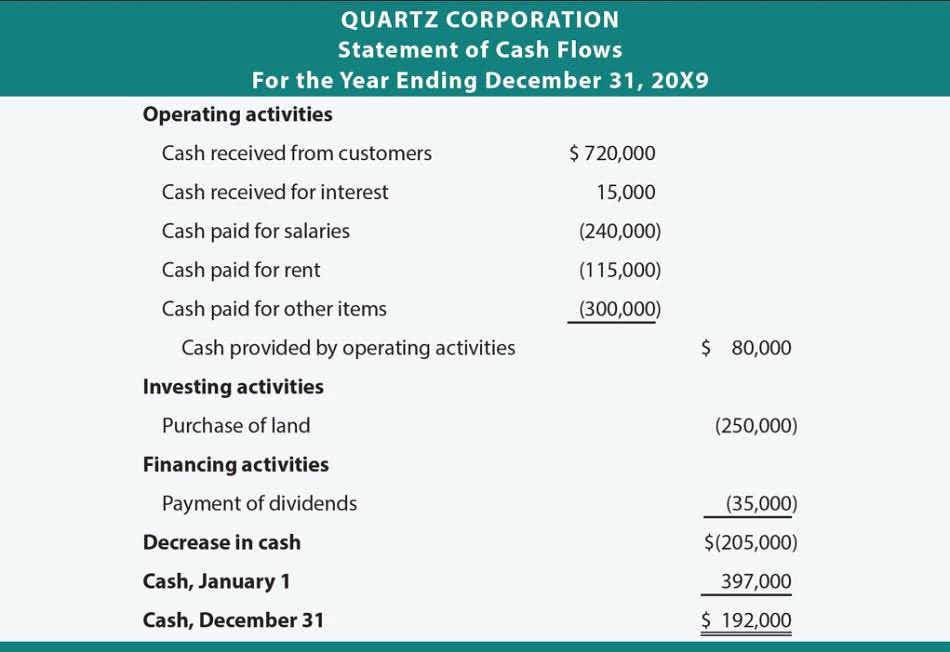
Both ROS and gross margin measure the profitability and efficiency of a business’s operations. As we can see from these examples, different companies Cash Flow Statement have different levels of ROS depending on their industry, business model, and cost structure. Generally, a higher ROS indicates a more efficient and profitable company, while a lower ROS indicates a less efficient and profitable company. However, ROS should not be used in isolation, but rather in comparison with other companies in the same industry or with the company’s own historical performance. ROS can also be affected by various factors, such as accounting policies, seasonality, market conditions, and non-operating items. Therefore, it is important to analyze the underlying causes of changes in ROS and not just rely on the numbers.
Steps to Calculate ROI in Sales
What can any business do right now, at that very moment, to improve its return on sales ratio? We can highlight 3 main actions that will require from business owners nothing more than expertise in their field and a desire to improve (and a bit of cash, maybe). This might be the most straightforward way to increase return on sales — it’s at least the one you have the most control over. It takes a lot of careful consideration and market research to carry out effectively. It is important to note that «net sales» is used in return on sales the computation. Net sales is equal to gross sales minus any sales discounts, returns, and allowances.
The final step is to compare the company’s 15% operating margin to a peer group of competitors or the industry benchmark. This comparison lets you evaluate whether the company’s operating margin is high, low, or in the typical range for its peer group or industry. Every unsold item represents not just lost sales revenue, but also money spent on goods that didn’t produce a return.
Both net income and sales revenue can be found on the income statement of the company. First, let’s say your company’s profit margin is 10% and its sales revenue is $100,000. That means your company made $10,000 in profit from $100,000 in sales revenue. The return on sales ratio identifies the amount of profit that comes from a specific dollar of sales spending.

Perhaps you’d like to find an investor for your business or gauge your success against your competitors. Or maybe you just want to know how profitable your business is this quarter compared to last quarter. Regardless of the reason, knowing how to calculate the return on sales ratio is vital. When a company’s ROS decreases over time or falls below industry benchmarks, investors should investigate the underlying causes.
- When she’s not writing, Barbara likes to research public companies and play Pickleball, Texas Hold ‘em poker, bridge, and Mah Jongg.
- Encourage existing customers to upgrade to premium options or add complementary products/services.
- In this calculation, the resultant ROS is 20%, which would be considered relatively high in the real world, depending on the type of industry and company size.
- Let us take the example of Apple Inc.’s annual report for the year 2018.
- The ‘return on sales ratio formula’ is integral to ROI calculations, offering a simple yet profound means to gauge the efficiency of sales tactics.
The actual cash generated from these EBIT earnings will have reinvestment potential, although it’s not measured by the ROS ratio. If Company Y can maintain revenues while reducing expenses, the company will be more efficient and, ultimately, more profitable. If, however, it isn’t possible to reduce expenses, they should keep their expenses the same while striving for higher revenue numbers. As this example shows, the amount of profit doesn’t determine how efficient a business is. Company B is making more profit out of their revenue while Company A, having 20 times more revenue, generates less profit percentage.
So keeping a close watch on operating expenses, operating income, and operating profits reveals how well the company is able to turn sales into actual profit. Return on Sales is a vital metric for understanding and enhancing your business’s online bookkeeping profitability. By regularly calculating ROS and implementing strategies to improve it, you can ensure sustained financial health and competitive advantage. ROS helps stakeholders evaluate efficiency, spot improvement areas, and make more informed financial decisions.

It measures the returns of a specific project or venture on its own. When calculating return on sales, first obtain the business’ operating profit by subtracting costs or expenses from the revenue. Analysts, investors, and managers use financial ratios to understand how well a company can meet debt obligations, generate profits, and use resources effectively. Ratios also make it easier to compare businesses of different sizes and track results over time. ROS is a direct reflection of how efficiently a company is managing its operations.